
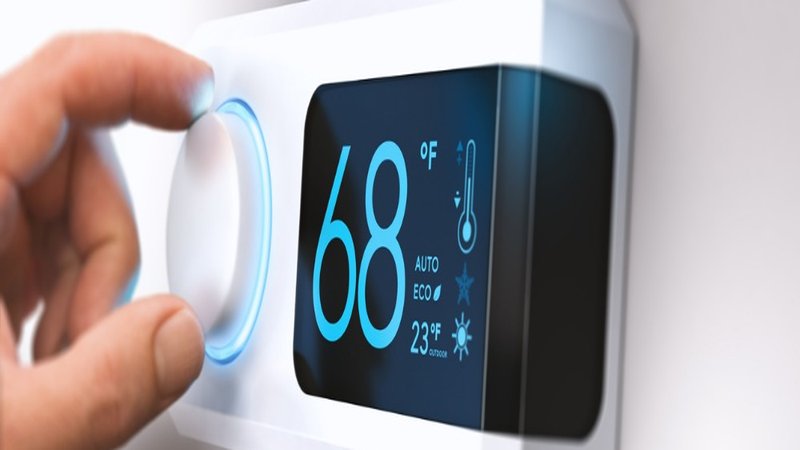
Let me tell you about a client I’ll call Karen. Not her real name. She lived in a 3,200‑square‑foot house outside Denver. Built in the 80s, central AC, natural gas furnace. She called me in August because her electric bill had hit $412. “I’m not running a bitcoin mine,” she said. “I don’t have a pool. I keep the thermostat at 76 degrees. How is this possible?”
I’ve seen this a hundred times. A bill that high in a house that size, with that thermostat setting? Something was wrong. Not just inefficient. Wrong.
Karen had already swapped every light bulb for LED. She had a smart thermostat. She turned off her computer at night. She was doing everything right. Yet her AC was running 16 hours a day, even when it was only 85°F outside.
TOU Optimizer
Shift usage to cheaper hours and save
All data stays in your browserI did a full energy audit. Blower door test. Thermal imaging. Duct pressure measurement. The blower door showed the house was reasonably tight. Not great, but not terrible. Then I put a pressure gauge on the supply duct. The numbers were bizarre. The duct system was losing almost 40% of its airflow before it ever reached the vents. That’s like filling a bucket with a hole in the bottom.
We crawled into the attic. In Colorado, attics are brutal in summer. It was 140°F up there. But we found the problem within ten minutes. The main supply trunk — the big rectangular duct running from the furnace to the rest of the house — had a massive tear where two sections had separated. It wasn’t a small leak. It was a gap big enough to stick my hand through. Cold air was dumping straight into the attic.
Karen had been paying to cool her attic for who knows how long. Years, probably. The furnace would kick on, push cold air into the duct, and most of it would spill out into the fiberglass insulation before any reached the bedrooms.
This is more common than you think. Duct leaks are the hidden tax of forced air systems. The average home loses 20‑30% of its conditioned air through leaks. Karen’s was worse because the duct had actually pulled apart. Her AC was running three times longer than it needed to. That $400 bill wasn’t just high. It was throwing money into the attic.
I sealed the tear with mastic and metal tape. Then I tested the rest of the ductwork and found three smaller leaks. Sealed those too. Total time: about two hours. Total cost for materials: maybe $40. I charged her for the audit and the repair, but the repair itself was cheap.
Then we re‑tested the duct pressure. The leakage dropped from 40% to 8% — within industry standards. I told her to run her AC normally for a month and call me back.
Her next electric bill was $187. She saved $225 in one month. The repair paid for itself in the first week.
I see this story over and over. People think high electric bills mean they need new windows, new insulation, a new HVAC system. Sometimes they do. But often, the problem is simpler. A leaky duct. A dirty filter. A failed capacitor. A thermostat that’s wired wrong.
Bill Breakdown
Break down your monthly electric bill by category
All data stays in your browserKaren now tells everyone about her attic adventure. She’s become a duct evangelist. She checks her bills obsessively. Last summer, her highest bill was $210. That’s less than half of the peak before the fix.
The math is straightforward. Her AC is a 4‑ton unit, 14 SEER. At 40% duct loss, about 2.4 tons of cooling was actually reaching her living space. Her house needed about 3.5 tons on a hot day. So the system ran almost continuously to compensate for the loss. After the fix, the same 4‑ton system delivered 3.7 tons of cooling. It cycled normally. The compressor ran less. The fan ran less. The savings came from run time, not from a new machine.
This is why I always start with an audit before recommending big purchases. A new 20‑SEER AC would have cost Karen $8,000 and saved her maybe $50 a month. The duct repair cost $200 and saved her $225 a month. Which one makes more sense?
If you have a high electric bill, don’t assume you need a new system. Check your ducts first. Look for disconnected sections, especially in the attic or crawlspace. Feel for air blowing out of joints. If you have access to a thermal camera, you can see the cold air leaking.
I have a tool that helps people estimate their duct loss.
The Home Energy Bill Breakdown tool can also help you isolate whether your HVAC is the culprit.
And for people who want to go deeper, the Insulation ROI Calculator can help you see if your attic insulation is also part of the problem.
Karen still texts me sometimes. She sent me a photo of her electric bill last month: $148. She wrote “Look, no duct leak!” I laughed. She also told me she told her neighbor about the audit. The neighbor had a similar problem. Same tear in the duct, same era of construction. It’s a known flaw in that subdivision.
That’s the thing about high electric bills. They’re not random. There’s a reason. Sometimes it’s a leaky duct. Sometimes it’s a failing compressor. Sometimes it’s an undersized furnace. But there’s always a reason. My job is to find it.
If you’re looking at a $400 bill and feeling helpless, don’t be. Start with the free stuff. Check your ductwork. Clean your filters. Look at your thermostat schedule. Then call an auditor if you’re still stuck. You don’t need to replace everything. You just need to find the hole.
— Jim Patterson
P.S. Karen gave me a box of cookies after that first repair. Her daughter had baked them. I ate two. They were good. The savings were better.