
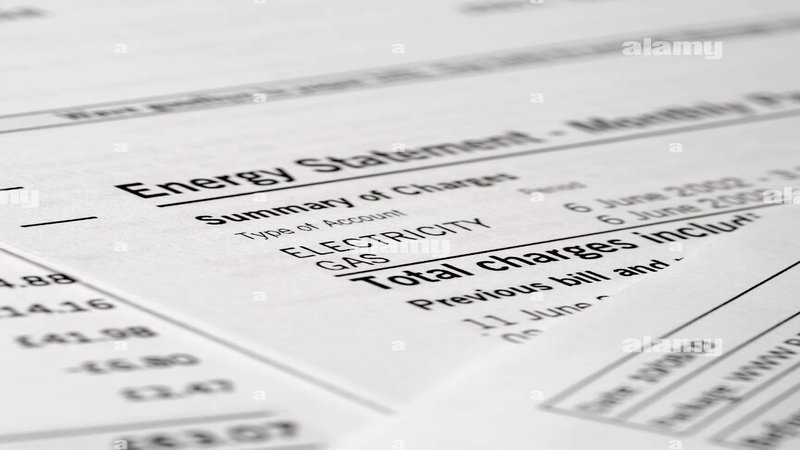
I had a client named Teresa call me last year. She was furious. Her electric bill had gone up $40 in one month, but her usage had barely changed. She thought the utility was cheating her. I asked her to send me the bill. I looked at the line items. Her usage went from 850 kilowatt‑hours to 880 kilowatt‑hours, a 3.5% increase. But her bill went from $112 to $152, a 35% increase. That math didn’t add up. Then I saw it. Her utility had increased the fuel adjustment charge from $0.002 per kWh to $0.025 per kWh. That’s an extra $0.023 per kWh. On 880 kWh, that’s an extra $20. Plus, they had added a new “demand fee” of $12. Plus, the base charge had gone up $3. Total increase: $35. That explained it.
Most people look at the total due and the usage number. They divide one by the other and think they understand. But electric bills have layers. There are fixed charges you pay no matter what, variable charges that depend on how much you use, and surcharges that change based on fuel costs or seasonal factors. If you don’t know these fees, you can’t control them.
Let me break down the three most common hidden fees.
Bill Breakdown
Break down your monthly electric bill by category
All data stays in your browserThe base charge. Sometimes called the customer charge, service charge, or meter fee. This is a fixed monthly fee just for being connected to the grid. It covers the cost of your meter, the billing system, and the wires from the pole to your house. This fee ranges from $8 to $25 per month. You pay it even if you use zero electricity. I’ve seen solar customers get angry when their bill is $15 even though they produced all their own power. That’s the base charge. You can’t avoid it unless you go completely off‑grid, which is expensive.
TOU Optimizer
Shift usage to cheaper hours and save
All data stays in your browserTeresa’s base charge was $14. That’s normal. The $3 increase was annoying but not huge. The real problem was the other fees.
The demand fee. This is a relatively new one. Utilities in some states are adding demand charges for residential customers. The fee is based on your highest 15‑minute average usage during the month. If you run your oven, your AC, and your dryer at the same time, you might hit a peak of 8 kilowatts. The demand fee might be $2 per kilowatt of peak demand, so you’d pay $16 extra that month. The idea is to discourage you from using a lot of power all at once. The utility has to build capacity for that peak, even if it only happens once a month.
Demand fees are common in Texas, Arizona, and parts of the Midwest. They are becoming more common everywhere. If you have a demand fee on your bill, you need to change your behavior. Don’t run multiple large appliances at the same time. Stagger your usage. Use timers. Teresa had a demand fee of $12 on her bill. She had no idea what it was. I told her to run her dishwasher after 9 PM instead of at 6 PM. That alone dropped her peak demand by 1.5 kilowatts. Her demand fee dropped to $9 the next month. Small change, but it adds up.
The fuel adjustment clause. This is the sneakiest fee. When the utility pays more for natural gas, coal, or uranium than they planned, they pass that cost to you through the fuel adjustment. It’s usually a small fraction of a cent per kWh. But when fuel prices spike, the fuel adjustment can jump dramatically. In 2022, natural gas prices doubled. Some utilities had fuel adjustments as high as $0.03 per kWh. On a 1,000 kWh bill, that’s an extra $30.
The fuel adjustment is not a scam. It’s a legitimate pass‑through. But it’s also out of your control. You can’t negotiate gas prices. You can’t switch to a cheaper fuel source. All you can do is reduce your usage so the fuel adjustment applies to fewer kilowatt‑hours.
Teresa’s fuel adjustment jumped because of a winter natural gas price spike. She had an 80% efficient gas furnace. Her usage wasn’t high, but the per‑unit cost was. She asked me if she should switch to a heat pump. I ran the numbers. A heat pump would cost $8,000. Her gas savings would be about $300 per year. Payback 27 years. Not worth it. I told her to wait until her furnace died, then switch.
Now let me give you a full example of a real bill with all these fees. I pulled one from a client in Arizona last August. Usage: 1,450 kWh. Base charge: $18. Distribution: $0.043 per kWh = $62.35. Transmission: $0.008 per kWh = $11.60. Supply: $0.073 per kWh = $105.85. Fuel adjustment: $0.019 per kWh = $27.55. Demand fee: $3.50 per kW × peak of 5.2 kW = $18.20. Public benefits: $2.50. Taxes: $12.40. Total bill: $258.45. Average rate per kWh: $0.178. But the supply rate alone was only $0.073. The rest was other fees.
If that client reduced his usage by 200 kWh, his supply, distribution, transmission, and fuel adjustment would drop by about $29. His demand fee might drop if his peak also dropped. His base charge and taxes would stay about the same. So his saving per avoided kWh would be about $0.145, not $0.178. That’s still a good incentive to save, but it’s not as high as the average rate.
I have a tool that helps you see your own fee structure.
Once you know your demand fee, you can use the Time‑of‑Use Rate Optimizer to schedule your appliances.