
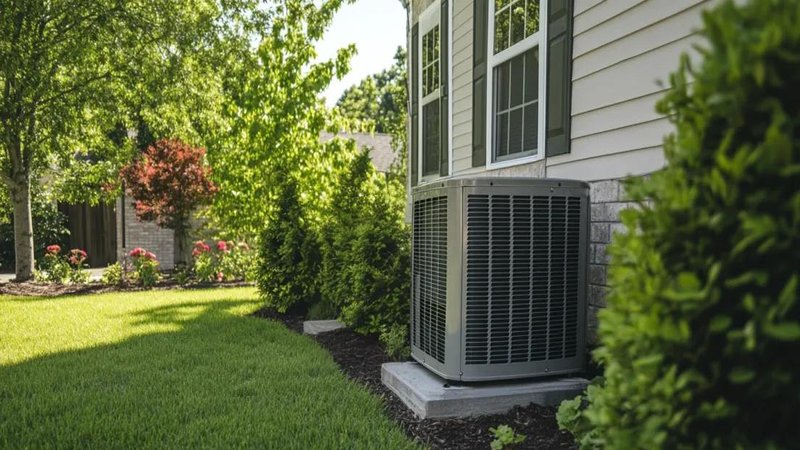
I got a call from a guy named Tom a couple of years ago. He was frustrated. His electric bill had been creeping up for years, and he couldn’t figure out why. He had already replaced his light bulbs with LEDs. He had a programmable thermostat. He turned off his computer at night. He was doing all the things you’re supposed to do. Yet his summer bill was hitting $260 for a 1,600‑square‑foot house. He thought he needed a new AC. He wanted me to give him a quote for a high‑efficiency unit.
I told him I don’t sell ACs. I audit houses. So I went over to his place and spent about an hour walking around. I found three big problems. First, his air filter was completely clogged. He hadn’t changed it in over a year. The filter was so dirty that the blower was working twice as hard to move air. Second, his return air grille was blocked by a couch. The previous owners had moved the couch in front of the grille and he never thought about it. Third, his outdoor condenser unit was surrounded by overgrown bushes. The AC couldn’t breathe.
TOU Optimizer
Shift usage to cheaper hours and save
All data stays in your browserI cleared the couch, swapped the filter, and trimmed the bushes. Took me about an hour. He paid me for the audit, which was $200. Then I told him to wait a month and look at his bill. He called me 32 days later. His bill had dropped to $156. That’s a 40% reduction. He saved $104 in one month. The audit paid for itself in two months. And he didn’t need a new AC.
The lesson is that many high energy bills are caused by simple maintenance issues, not major equipment failures. A dirty filter can increase your energy use by 5‑15%. A blocked return can double that. Overgrown bushes can reduce AC efficiency by 10‑20%. Together, they can wreck your bill.
Let me break down the numbers. Tom’s AC was a 3‑ton unit, 13 SEER, about 12 years old. Under normal conditions, it would use about 2.5 kWh per hour of runtime. On a hot day, it might run 8 hours, using 20 kWh. At $0.14 per kWh, that’s $2.80 per day. With the dirty filter, blocked return, and bushes, his AC was running 12 hours a day because it couldn’t cool effectively. That’s 30 kWh per day, $4.20 per day. Over a 30‑day billing cycle, that’s an extra $42. Add the extra fan runtime and the less efficient heat transfer, and you get to $104.
I’ve seen this so many times. People think their AC is dying. They call a contractor, get a quote for $6,000, and sign on the dotted line. But often, the old unit is fine. It just needs a little attention.
Here’s what you can do yourself. First, change your air filter every 1‑3 months. Write the date on the filter frame. I do mine on the first of every month. It takes 30 seconds. Second, make sure your return air grilles aren’t blocked by furniture. You need at least 12 inches of clearance. Third, clear away any bushes, leaves, or debris from around your outdoor condenser. You need at least 2 feet of clearance on all sides. Fourth, hose off the condenser fins once a year. Turn off the power first, then gently spray from the inside out. Those fins bend easily, so be careful.
These four things take about an hour total. They cost nothing except the filter, which is $5‑$10. And they can save you hundreds of dollars a year.
I had another client, a woman named Rosa, who called me because her upstairs bedrooms were always hot in summer. I checked her system. The filter was clean, the return wasn’t blocked, and the bushes were fine. But I noticed that half of her supply vents were closed. Someone had closed the vents in the guest room and the office because they were “not using those rooms.” But closing vents in a modern HVAC system doesn’t save energy. It increases pressure in the ducts, which causes leaks and reduces efficiency. I told her to open all the vents. Her upstairs cooled down immediately, and her bill dropped $30 a month.
Closing vents is one of the most common myths. Don’t do it. Your system is designed for all vents to be open. If a room is too hot or too cold, you need duct balancing, not vent closing.
Another simple fix is to check your ductwork for obvious disconnections. In Tom’s attic, I found a duct that had pulled apart at a joint. Cold air was pouring into the attic. I pushed it back together and sealed it with foil tape. That took five minutes. His bill dropped another $15 a month after that.
I have a tool that helps you diagnose whether your AC is running too long.